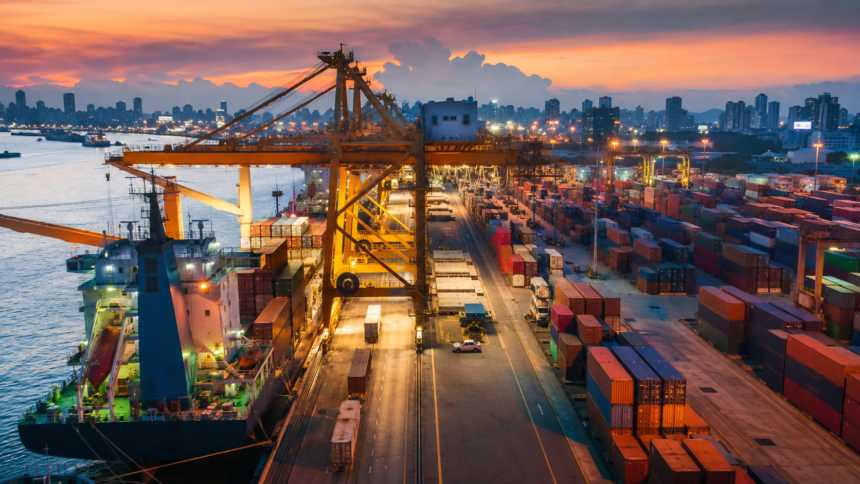

ASEAN is entering its next decade from a position of unusual economic strength.
The 10-member bloc attracted approximately US$226 billion in foreign direct investment (FDI) in 2024, extending a run of annual inflows above US$200 billion that began in 2021 despite a difficult global investment environment. By comparison, worldwide FDI declined 11% last year, according to UNCTAD, underscoring Southeast Asia’s resilience as companies continued diversifying production away from concentrated manufacturing hubs.
Trade tells a similar story. ASEAN merchandise trade exceeded US$3.8 trillion in 2024, while the bloc’s latest economic strategy projects annual trade could reach US$5.3 trillion by 2030 if regional integration and global demand continue expanding. Manufacturing investment surged almost 150% to US$44 billion, driven by electronics, electric vehicles, semiconductors and digital infrastructure, industries increasingly central to global supply-chain restructuring.
For ASEAN policymakers, these figures represent more than economic momentum. They underpin a much larger ambition.
Under the newly adopted ASEAN Community Vision 2045 and the ASEAN Economic Community Strategic Plan 2026–2030, the bloc aims to become the world’s fourth-largest economy by 2045, positioning itself as a leading industrial, technological and investment hub across the Indo-Pacific.
But the strategy also raises an increasingly important question.
Where will ASEAN find the next generation of resources, markets, investment opportunities and industrial partners needed to sustain that growth?
The answer may increasingly lie beyond Asia.
A New Economic Phase
The latest ASEAN economic blueprint differs noticeably from previous regional strategies.
Earlier integration plans focused primarily on lowering trade barriers within Southeast Asia and attracting foreign manufacturers. The new strategy reflects a different world, one shaped by supply-chain disruptions, geopolitical fragmentation, energy security concerns and industrial competition.
Rather than simply expanding exports, ASEAN now seeks to strengthen industrial ecosystems, diversify critical supply chains, accelerate decarbonisation, attract higher-quality investment and deepen partnerships beyond its traditional economic relationships.
The numbers explain why.
ASEAN today represents a market of more than 684 million people with a combined GDP exceeding US$4 trillion. Since the pandemic, it has consistently ranked among the world’s largest recipients of foreign investment, benefiting from multinational companies relocating or expanding production across Vietnam, Indonesia, Malaysia and Thailand.
Yet sustained industrial expansion requires more than factories.
It requires secure access to critical minerals, affordable energy, resilient logistics and growing export markets.
Supply Chains Are No Longer Just About Asia
The restructuring of global supply chains has become one of the defining economic trends of the decade.
Companies once concentrated production in a handful of markets increasingly seek geographical diversification, balancing efficiency with resilience after the disruptions caused by COVID-19, geopolitical tensions and shipping bottlenecks.
ASEAN has emerged as one of the principal beneficiaries of that shift.
But becoming a larger manufacturing hub also increases demand for strategic inputs.
Electric vehicles require lithium, nickel, cobalt and graphite.
Digital infrastructure depends on copper and rare earth elements.
Renewable energy deployment demands large quantities of transmission equipment, battery materials and industrial metals.
At the same time, ASEAN’s transition toward lower-carbon growth requires greater investment in renewable energy, sustainable infrastructure and cleaner industrial supply chains.
Its new economic strategy explicitly identifies resilient value chains, sustainable industrialisation and stronger international partnerships as long-term priorities.
The question is no longer whether ASEAN will globalise further.
It is where that global expansion will lead.
More Than 7,000 Kilometers Away, Another Story Is Unfolding
While ASEAN consolidates its position as one of the world’s fastest-growing industrial regions, Africa is undergoing its own structural transformation.
The African Continental Free Trade Area (AfCFTA) has quietly become the world’s largest free trade area by number of participating economies.
By January 2026, 49 of the African Union’s 54 member states had deposited their instruments of ratification, representing roughly 90% of the continent.
Operational progress, while uneven, has accelerated.
Customs clearance along the strategic Tema–Abidjan corridor has fallen from approximately 12 hours to 9.5 hours, while more than half of the 220 reported non-tariff barriers have been resolved in an average of 39 days. Meanwhile, the Pan-African Payment and Settlement System (PAPSS) has generated between US$5 million and US$8 million in foreign-exchange savings since its introduction by reducing reliance on third-country currencies.
The results are beginning to appear in trade data.
Intra-African trade reached approximately US$220 billion in 2024 and is projected by Afreximbank to climb to around US$230 billion in 2026, assuming continued implementation of AfCFTA reforms.
The figure remains modest compared with Asia.
Intra-African commerce still accounts for only 15–18% of the continent’s total trade, versus 59% in Asia, 55% in the Americas and 68% in Europe.
But that comparison also illustrates the scale of Africa’s remaining growth potential.
A Different Investment Landscape
Africa’s investment story is also evolving.
South Africa, Egypt, Nigeria and Kenya remain the continent’s largest investment destinations, while East Africa attracted approximately US$4.9 billion in approved FDI during the third quarter of 2025 despite political uncertainty in parts of the region.
Perhaps more importantly, the composition of investment is changing.
Rather than relying predominantly on Western capital, African economies are increasingly supported by regional development finance institutions, sovereign investors and pan-African financial platforms.
Governments are simultaneously investing in logistics corridors, renewable energy, industrial parks and digital infrastructure—precisely the sectors receiving greater attention under ASEAN’s own long-term development strategy.
The Missing Link Is Institutional, Not Economic
Despite these converging trends, economic relations between ASEAN and Africa remain surprisingly underdeveloped.
Unlike ASEAN’s extensive partnerships with China, Japan, South Korea, India or the European Union, no comprehensive ASEAN–Africa trade framework currently exists.
Cross-border investment is equally difficult to measure.
Singapore, the source of roughly 75% of intra-ASEAN outward investment, often channels capital through international financial centres, making African investment flows difficult to isolate statistically.
Yet the underlying logic continues strengthening.
Africa possesses abundant renewable energy resources, rapidly expanding digital markets, globally significant deposits of critical minerals and one of the world’s youngest populations.
ASEAN brings manufacturing expertise, industrial capital, technology and increasingly sophisticated regional supply chains.
Viewed separately, each region represents a growth story.
Viewed together, they may represent one of the next frontiers of South-South economic integration.
Beyond Geography
For much of its history, ASEAN’s economic outlook has naturally focused on Asia.
That geography is beginning to expand.
As Southeast Asia pursues its ambition of becoming the world’s fourth-largest economy, sustaining that trajectory will require more diversified supply chains, broader investment opportunities and access to faster-growing external markets.
Africa is unlikely to replace China, the United States or Europe as ASEAN’s principal economic partners.
It does not need to.
Instead, it is emerging as something potentially more valuable: a complementary growth frontier where industrial investment, energy security, critical minerals and expanding consumer markets increasingly intersect.
ASEAN’s next chapter will undoubtedly be written in Southeast Asia.
Some of its most important opportunities, however, may lie well beyond it.