
With global fertilizer prices projected to rise 31% in 2026 amid Middle East supply disruptions, Africa’s three industrial giants, Morocco’s OCP, Nigeria’s Dangote Fertiliser, and Singapore-based Indorama, are racing to close a structural gap that leaves sub-Saharan Africa importing 90% of its mineral fertilizers. The battle for agricultural self-sufficiency is now both an industrial and a food security imperative.
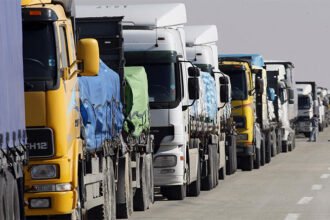
Africa’s fertilizer sector is navigating its most critical juncture in decades. A near-closure of the Strait of Hormuz since late February 2026, following escalating US-Iran military exchanges, has disrupted the supply of ammonia, urea, sulfur and phosphatic fertilizers from the Gulf, a region that accounts for roughly a third of globally traded fertilizers. For a continent that imports approximately 90% of its mineral fertilizers and enters the 2026 planting season in a position of acute vulnerability, the shock is testing whether a decade of industrial investment by OCP, Dangote and Indorama is finally delivering structural change.
A $31 Billion Price Shock Forces the Continent’s Hand
The World Bank projected a 31% increase in global fertilizer prices for 2026 in its latest Commodity Markets Outlook, a dramatic reversal driven primarily by the escalating conflict in the Middle East. The fertilizer price index rose by more than 12% in the first quarter of 2026 alone, reaching levels not seen since the 2022 global energy crisis.
Fertilizers have not been this unaffordable since 2022, eroding farmers’ incomes and threatening future agricultural yields, the World Bank stated.
The institution warned that average urea prices in 2026 could exceed the 2022 average of $700 per metric ton, the second-highest level in real terms after 1974. The near closure of the Strait of Hormuz since late February 2026 has disrupted flows of ammonia, urea, sulfur and phosphatic fertilizers from the Gulf region, through which close to one-third of globally traded fertilizers typically transit. The International Fertilizer Association reported that Iran, Qatar, Saudi Arabia, the UAE and Bahrain together accounted in 2024 for 23% of global ammonia trade, 34% of global urea trade and 18% of global ammoniated phosphate trade.
The Africa fertilizer market, valued at $54.77 billion in 2025, is projected to reach $58.71 billion in 2026 and $83.05 billion by 2031, at a compound annual growth rate of 7.19%, according to Mordor Intelligence.
OCP, Dangote and Indorama: Three Industrial Models, One Strategic Race
OCP Group commands the most structurally advantaged position. Morocco’s state-owned phosphate giant controls over 70% of the world’s known phosphate reserves and generated approximately $9.76 billion in revenue in 2024. Under its $13 billion green investment programme running through 2027, OCP is expanding annual production capacity to 9 million tons, developing a new phosphate mine in Meskala and constructing a fertilizer complex in Mzinda. The company is investing $5.25 billion in 2026 alone.
OCP’s continent-wide strategy has delivered a 54% market share across Africa. Its $2.6 billion fertilizer plant in Ethiopia — with 3.8 million tons annual capacity — exemplifies a model combining Moroccan phosphate expertise with local gas and public financing, replicating across Senegal, Ghana, Nigeria and Tanzania.
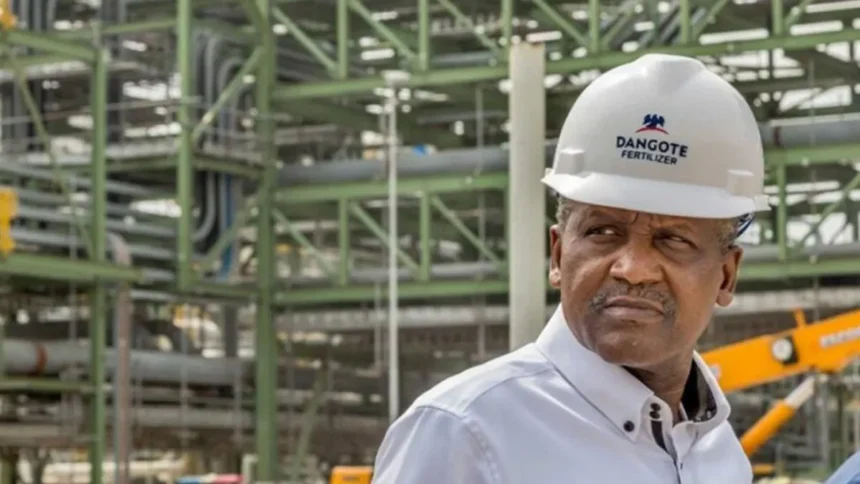
Dangote Fertiliser is pursuing the most aggressive capacity play. The Dangote Group will need at least $40 billion of investment to fund a growth drive over the next five years that includes quadrupling fertilizer output, according to the African Export-Import Bank. The expansion comes as supply disruptions from the Persian Gulf strain global fuel and fertilizer supply chains, exposing vulnerabilities for import-dependent African economies.
Dangote has already awarded contracts to build four new production units that will push total urea capacity to more than 8 million tons per year, positioning Nigeria’s Lekki Free Trade Zone as the continent’s largest fertilizer manufacturing hub.
Indorama is targeting both nitrogen and phosphate simultaneously. The company’s third urea production line in Port Harcourt, backed by a $1.25 billion IFC financing package, is expected to be commissioned in 2026, lifting Indorama’s total Nigerian urea output to 4.2 million tons per year. In parallel, the group is leading a $550 million phosphate fertilizer plant in Egypt with local partner Misr Phosphate, financed with IFC and EBRD support, targeting commissioning in 2028.
The combination of supply disruptions and subsidies could create a ‘global auction’ for fertilizer, where poorer countries are priced out. Sub-Saharan Africa, where soils are already chronically under-fertilized and fiscal support is limited, would be particularly exposed — Svein Tore Holsether, Chief Executive, Yara International World Fertilizer, May 7, 2026
A Structural Shift That Is Still Incomplete
The industrial momentum is real but the timeline remains misaligned with 2026’s supply emergency. The region still imports approximately 90% of its mineral fertilizers, leaving farmers exposed to exchange-rate pressure, shipping disruption, supplier concentration and sudden global price movements. The Africa Fertilizer and Soil Health Action Plan, adopted at the African Union’s Nairobi Summit in 2024, commits to tripling domestic production by 2034 and doubling cereal yields, but the crisis is arriving on a different schedule.
Fertilizer shipments passing through the Strait of Hormuz account for roughly one-quarter of global ammonia trade and more than a third of seaborne urea. Even the slightest perceived risk drives up fertilizer prices, stalls shipments and causes a seismic shift in food price inflation.
The African Development Bank warns that even a 10% reduction in fertilizer availability could slash yields of staples like maize and rice by 25% across Sub-Saharan Africa. The World Food Programme warns that if the conflict remains prolonged, these pressures could push up to 45 million more people into acute food insecurity in 2026.
As the 2026 planting season advances, Africa’s ability to navigate fertiliser supply risks will depend on how quickly governments, regional organisations and private sector partners work together and with a wide reach — African Development Bank
Logistics, Financing and the Last-Mile Gap
Fertilizer sovereignty should not mean autarky or the rejection of global trade. Africa needs a more resilient system that combines imported fertilizers where needed with local blending, better soil testing, organic amendments, legumes, composting, biofertilizers, regional logistics and, over the longer term, low-carbon ammonia production.
About 80% of fertilizer used across sub-Saharan Africa is imported, often at prices much higher than in Europe due to freight, financing and logistics costs. When global supply falters, Africa’s farmers feel the economic shocks hardest. Distribution infrastructure, blending plants, rural storage networks, last-mile delivery, remains the continent’s critical bottleneck regardless of upstream production gains.
OCP’s carbon exposure is attracting new regulatory scrutiny. The EU’s Carbon Border Adjustment Mechanism, in place since January 1, 2026, covers fertilizers and can translate into additional costs for carbon-intensive products such as ammonia, phosphates or nitrogen-based fertilizers, with discussions in Brussels examining whether flexibility mechanisms could be added under exceptional market conditions.
If such risks materialize, average urea prices in 2026 could exceed the 2022 average of $700/mt, the second-highest level in real terms after 1974 — World Bank, Commodity Markets Outlook May 2026
The race between OCP, Dangote and Indorama is unfolding against the most adverse global backdrop since 2022. Investors and policymakers will be watching whether Dangote’s capacity expansion delivers on its 2028 self-sufficiency timeline, whether Indorama’s third Nigerian line commissions on schedule, and whether OCP can convert its phosphate dominance into the affordable, logistics-ready product that smallholder farmers across sub-Saharan Africa actually need before the 2026 harvest season determines the continent’s near-term food security calculus.