
The Northern Corridor entered 2026 at peak operational capacity and maximum geopolitical stress. Record cargo volumes at Mombasa, a new AfDB infrastructure tranche and Kenya’s fast-tracked railway extension are colliding with a security collapse in eastern DRC that has closed the corridor’s primary Congolese entry points and forced a structural reassessment of a route designed to serve a 100-million-person market.
Record Volumes, New Bottleneck
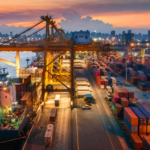
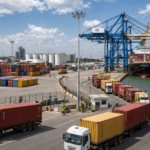
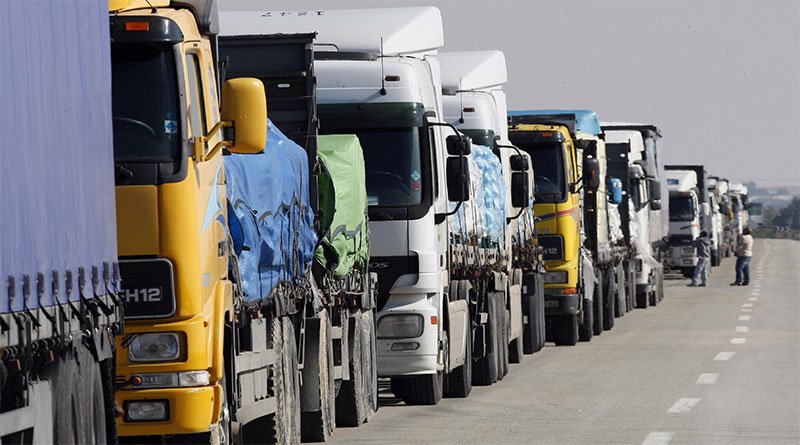
The Port of Mombasa handled 45.45 million tonnes of cargo in 2025 — up 10.9% year-on-year, with transit cargo surging 19.5% to 15.88 million tonnes. Middle East shipping disruptions accelerated the trend. Lamu Port received 74 vessels in the first two and a half months of 2026, roughly a third of all calls since it opened in 2021, compared to just two container ships in Q1 2025.
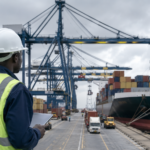
The gains now face an operational headwind. Effective May 1, 2026, every consignment through Mombasa is subject to mandatory radioactive screening under a Kenya Nuclear Regulatory Authority directive. The Federation of East African Freight Forwarders Associations has called for transparent timelines from KNRA and KPA on operationalisation, urging adequate scanning equipment at all berths to prevent bottlenecks.
AfDB Fills the Road Gap… On Paper
The AfDB’s $239 million commitment covers Uganda’s Busega-Mpigi Expressway and Rwanda’s Kagitumba-Kayonza-Rusumo route. Once completed by 2029-2030, over 1,900 kilometres from Mombasa to the eastern DRC border will form a near-continuous dual carriageway. Transit time Mombasa-Kigali would fall from 7-10 days to 5-6 days. Logistics costs, currently 28-35% of goods value, could drop to 18-22%.
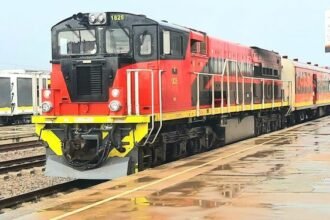
Kenya’s SGR extension toward Malaba, stalled six years, is now being fast-tracked for a 2027 completion, adding multimodal capacity to the corridor.
Conflicts come with both negative and positive impacts. We are experiencing a lot of traffic, more so transshipment, in Lamu and Mombasa — Capt. William Ruto, Managing Director, Kenya Ports Authority Energy Capital Power, April 2026
Where Infrastructure Ends, Conflict Begins
The corridor’s commercial rationale depends on accessing the DRC, which accounts for 11.8% of Mombasa’s transit cargo. That access is now compromised. M23 controls Goma and Bukavu, the two primary DRC entry points. The N2 highway and Goma airport are effectively closed for normal commercial operations. An April 2026 DRC-M23 agreement committed to facilitating humanitarian access, but on-the-ground implementation remains uneven.
The structural gap runs deeper. No east-west trade corridor exists within DRC itself. The Trans-Africa Highway section through northeast DRC, 1,561 kilometres, consists of unpaved tracks, impassable after rain. There is no road or rail network linking Kinshasa to the country’s east.
It is only via regional corridors that we will be able to move goods and services easily across the continent, reduce transport costs and achieve effective economic development — Dr. Akinwumi Adesina, President, African Development Bank Group AfDB Annual Meetings, 2025
Tanzania Presses Its Advantage
EAC and TradeMark East Africa studies estimate that without continued Northern Corridor upgrades, up to 40% of Rwanda-Burundi transit traffic could shift to Tanzania’s Central Corridor by 2030. The AfDB in 2024 approved a $696 million partial credit guarantee to unlock $3.9 billion for Tanzania’s Standard Gauge Railway to Burundi and the DRC. Dar es Salaam’s vessel waiting incidence has declined from 84% to 64%; Mombasa’s legacy terminal holds at 97-100%.
The corridor’s investment thesis depends on variables infrastructure financing cannot resolve: the pace of DRC ceasefire implementation, whether Kenya’s SGR hits its 2027 deadline, and whether Mombasa’s new screening regime can be absorbed without dwell-time deterioration. Every kilometre completed between Mombasa and the Goma border delivers zero commercial return while armed groups control what lies beyond it.