
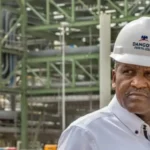
Few days before taking the stage at the Kigali Convention Centre, Aliko Dangote sat down at IFC headquarters:
Most of our companies we own super majority, 89%, 90%, 92%, some 100%, (…) And we are saying that no, for us to grow up at scale, we need to make sure that we have partnership, — he told IFC Managing Director Makhtar Diop on May 6.
It was, by any measure, the most honest pre-Forum statement made by any of the men flying to Rwanda this week. It was also, inadvertently, the clearest diagnosis of the gap this summit is being convened to close.
The Africa CEO Forum 2026 opens under the theme “The Scale Imperative: Why Africa Must Embrace Shared Ownership,” built on a single conviction: scale can only be achieved through shared African ownership, nations and businesses investing not only in themselves, but in each other’s growth, assets, and markets. The argument is correct. The question that data forces is whether the men making it have structured their companies to reflect it. The answers are instructive, and more complicated than the theme suggests.
DANGOTE: The Man Who Admitted It First
Give Dangote this: he said it out loud. The conversation at IFC is the clearest window into what shared ownership actually means when it collides with the balance sheet reality of Africa’s largest private industrialist.
One week before the Forum, Dangote unveiled plans to enter the power sector with a proposed 20,000-megawatt electricity generation project, one of Africa’s most ambitious private-sector energy announcements, and delivered a sharp critique of Africa’s structural barriers:
When you look at Africa today, somebody like myself, I need 38 visas to move around. There’s no way you can trade with your neighbours like this. — Aliko Dangote, Founder, President & Chief Executive Officer of Dangote Group.
The infrastructure ambition is documented and real. The refinery hit its full capacity of 650,000 barrels per day, the world’s largest single-train refinery, built at an initial investment exceeding $19 billion. As of February 2026, it had reached full refining capacity. In January 2026, it supplied 62% of Nigeria’s petrol, overtaking imports for the first time.
The IPO proposition is concrete. On April 1, Nigerian Exchange Group convened the chief executives of five major African stock exchanges, Johannesburg, Ghana, Nairobi, Ethiopia and the BRVM, to structure a simultaneous multi-exchange listing. The session was framed as a real-world test of continent-wide capital market integration.
But the structure is where the numbers speak for themselves. The IPO offers 5 to 10% of the capital, with Dangote retaining 65 to 70% control. NNPC holds a 7.25% stake on behalf of Nigerians, a position Dangote compared to Elon Musk’s stake in Tesla. The refinery carries $3.65 billion in debt, with a repayment plan dependent on operational cash flows and asset monetisation, including potential disposals of stakes in Dangote Cement.
Dangote’s own framing on the dividend is revealing. At IFC on May 6, he projected that “worst case scenario, we are going to give dividend of $20 billion”, then floated the possibility of selling 25% rather than 10%. The numbers shifted within the same conversation. What is fixed: exchange participants at the Lagos meetings raised concerns about whether the available float would be large enough to accommodate meaningful allocations across multiple exchanges simultaneously.
The model Dangote is building is genuinely new for Africa: private capital takes the first-risk position on a continental asset, then opens ownership progressively through public markets. Whether 10% constitutes shared ownership, or whether the $20 billion dividend promise requires the 25% float he mentioned but has not committed to, is the question the Forum will not formally ask.
What he said at IFC, however, is the answer to why the Forum exists:
If you keep waiting for foreign investors, (…) they are not going to come. They will only come when they see our own commitment, — he added.
ACCESS HOLDINGS: The Integration Story That Ran Into Its Own Regulator
At the Africa CEO Forum 2024, also in Kigali, Aigboje Aig-Imoukhuede stood on stage and said: “We can’t wait to be saved. Africans need to solve Africa’s problems.” Two years later, he will return to the same city. In the week before his flight, his regulator handed him a problem he cannot solve by conviction alone.
Access Holdings will reduce equity stakes in some of its 24-country subsidiary network after the CBN capped Nigerian banks’ equity investments in overseas units at 10% of shareholders’ funds. Roosevelt Ogbonna, CEO of Access Bank, disclosed the requirement and the compliance timeline on an investor call.
The trajectory Aigboje Aig-Imoukhuede built before that order is not in dispute. In March 2002, he took over Access Bank with a mandate to move it from 65th place into the top ten within five years, what many considered impossible. Under his leadership, the group acquired Standard Chartered Gambia, ending 130 years of British presence in the country. In 2025, Access Holdings posted a record profit of 743 billion naira, up 16% year-on-year, driven by FX gains and pan-African acquisitions.
At the African Financial Summit in Casablanca in November 2025, Aig-Imoukhuede framed Africa’s capital problem precisely:
Africa collectively has around $9.5 trillion in sources of capital, the real challenge is not the volume of available capital but rather how it is being mobilized and utilized, — he said
The CBN’s May 5 ruling is its own answer to that question. The central bank is effectively signalling that the Nigerian domestic market is the primary obligation of licensed banks, with international operations treated as secondary rather than co-equal with home market activity.
In Kigali this week, executives will argue for African market integration. Few days before the Forum opened, Nigeria’s regulator was ordering its largest financial conglomerate to reduce precisely that integration. The gap between those two facts is not a footnote. It is the structural problem the Forum is attempting to address, demonstrated, in real time, by one of its own lead participants.
EQUITY GROUP: The One Model Where the Numbers Match the Argument
In April 2026, James Mwangi was named CEO of the Year at the Think Business Banking Awards. Equity Bank swept ten categories. Accepting the recognition, Mwangi said:
This reflects years of deliberate investment in building a resilient, inclusive and future-ready financial institution. — James Mwangi, CEO, Equity Group.
The data behind that statement is verifiable across six countries. Regional subsidiaries now account for nearly half of the group’s banking profitability. In 2025, profit jumped 55% to approximately $580 million. The DRC surged 58%, Uganda 500%, Tanzania 125%. Mwangi described the results plainly:
The 2025 performance reflects the success of our deliberate transformation into a diversified, regional financial services group. Our regional subsidiaries now contribute about half of our banking profitability, demonstrating the value of our pan-African footprint and the resilience that comes from diversification, — he said.
In 2026, facing regulatory friction in Ethiopia, where foreign ownership rules have stalled market entry, Equity Group pivoted to Angola to acquire a majority stake in a local bank. Mwangi’s declared target: 15 countries and 100 million customers by 2030. The group currently operates in seven.
The ownership structure matters here. Mwangi holds 3.39% of the group, a shareholder in the asset he is asking others to believe in. That alignment is structural, not rhetorical. It is also rare among the founders on the Forum’s stage.
Equity Group Holdings operates with more than 23 million customers and total assets exceeding $14 billion across six African countries. The expansion is not announced; it is running. The profitability is not projected; it is reported. Among the cases assembled in Kigali this week, Equity Group is the closest thing to a proof of concept.
ELSEWEDY ELECTRIC: African Scale Through a Different Model
Ahmed El-Sewedy’s case is worth reading precisely because it illustrates what African expansion looks like when shared ownership is not the mechanism.
Founded in 1938, Elsewedy Electric remains under the control of the El-Sewedy family, which holds 68.1% of the capital. Ahmed El-Sewedy personally holds 25.52%, 546 million shares and his brother Sadek an additional 25.53%. Their combined stake is valued at nearly $1.8 billion. The company is listed on the Cairo exchange; external shareholders exist.
Revenue reached $4.58 billion in 2024, up 52.4%, driven by the cables and wires segment which grew 66.4%. The African expansion is documented: a $2.5 billion agreement in Algeria covering new factories and renewable energy capacity, Elsewedy’s most significant Algerian commitment to date, following a presence since 2018 with more than 600 direct employees and approximately 45% market share in Algerian electrical equipment.
The model is distinct from the banking cases. Elsewedy builds industrial assets in African countries through contracts, typically with governments, rather than by opening its capital to African co-investors. Revenue flows back to Cairo. Ownership stays with the family. The expansion is real; the sharing is in jobs and infrastructure, not equity.
A legitimate model the Forum’s theme describes.
What the Numbers Say When You Read Them Together
Three facts sit underneath all of these cases.
One. African pension and deposit funds manage more than $1.1 trillion, yet allocations to infrastructure remain below 1%, not from simple risk aversion, but because African assets are not structured to meet institutional requirements: credit thresholds, predictable cash flows, professional governance, downside protection, credible exits. The paradox is real: sovereign debt attracts billions while infrastructure equity struggles to raise millions from the same investors. The founders in Kigali run companies that could close that gap. The question is how many have packaged their assets to invite African institutional capital in, rather than retaining 65 to 90% and calling it a continental project.
Two. The CBN ruling of May 5, forcing Access Holdings to reduce its African footprint one week before a Forum on African integration, is not an isolated regulatory event. It reflects a structural tension that no summit can resolve: national regulators optimise for domestic stability; continental ambition requires cross-border risk-taking. Those two objectives are currently pointed at each other.
Three. Dangote said it himself, without being prompted: African big companies have historically been held at 89%, 90%, 92%, some at 100%. The shift toward shared ownership he is now proposing is real, but it is a shift from a baseline of total control. The refinery structure introduces a new model for Africa: private capital takes the first-risk position, builds the asset, then progressively opens ownership through capital markets. If the IPO delivers at the scale he has floated, 25%, dollar dividends, multi-exchange listings, it will be the largest equity distribution event in African market history. If it delivers at 10%, with a float too thin for meaningful continental allocation, the distance between the Kigali speeches and the Lagos prospectus will be measurable in basis points.
The Africa CEO Forum is the right place to have this conversation. The men having it are the right men to be having it, because they are the only ones with the capital, the assets, and the track record to actually close the gap. What the data asks of them is not rhetorical commitment. It is a cap table.









Интересная статья, спасибо за информацию!
Test, message – Thank you!