
As Southeast Asia races to decarbonize one of the world’s fastest-growing economies, a vast pool of energy resources lies thousands of kilometers away.
From green hydrogen projects in Namibia to geothermal expansion in Kenya and some of the world’s richest deposits of minerals needed for clean technologies, Africa is increasingly positioned to become an overlooked partner in ASEAN’s push toward net-zero emissions.
The timing is notable. ASEAN’s newly adopted long-term energy blueprint calls for a “secure, resilient and interconnected low-carbon energy future”, setting ambitious regional targets for renewable energy deployment, energy efficiency and cross-border electricity integration through 2045. The bloc wants renewable energy to account for 30% of total primary energy supply and 45% of installed power capacity by 2030, while cutting energy intensity by 40% from 2005 levels.
Those ambitions will require not only massive investments inside Southeast Asia, but also secure access to clean energy technologies, critical minerals and new international partnerships.
Africa is emerging as one of the few regions capable of supplying all three.
By the Numbers
ASEAN’s Energy Transition
- 680+ million people
- 30% renewable share target in total primary energy supply by 2030
- 45% renewable share in installed generation capacity by 2030
- 40% reduction in energy intensity from 2005 levels
- Regional power demand projected to continue rising as industrialization and digitalization accelerate.
Energy Beyond Oil
For decades, Africa’s energy relationship with Asia centered on crude oil and liquefied natural gas. That equation is changing.
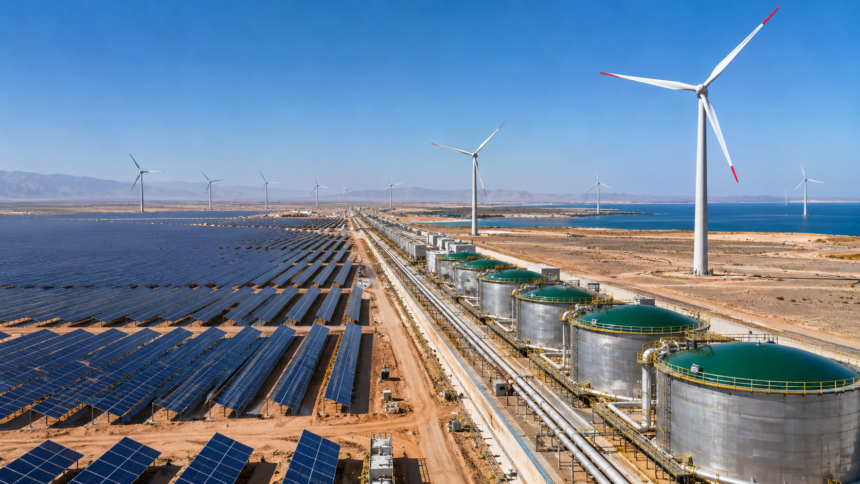
Countries including Namibia, Mauritania, Egypt, Morocco and South Africa are investing heavily in green hydrogen, while Kenya remains one of the world’s largest producers of geothermal electricity. Morocco has become a leading renewable energy exporter, and several African economies are scaling utility-scale solar faster than at any point in their history.
Rather than competing directly with Southeast Asia, these projects increasingly complement ASEAN’s transition.
ASEAN officials have repeatedly stressed that the region’s energy transition will require stronger cooperation with dialogue partners, international organizations and private investors as the bloc implements its new 2026–2030 energy strategy.
In a statement summarizing the Special Senior Officials Meeting on Energy (SOME), ASEAN said that “as ASEAN advances a more resilient, secure, and interconnected energy future, stronger collaboration and support from Dialogue Partners, International Organisations, and stakeholders will be instrumental in translating regional priorities into scalable and measurable outcomes.”
The Minerals Behind Net Zero
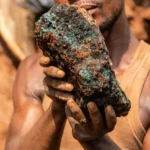
Electricity is only part of the equation. Electric vehicles, batteries, power grids and renewable technologies require enormous volumes of copper, cobalt, graphite, manganese and rare earth elements.
Many of those resources are concentrated in Africa. The Democratic Republic of Congo dominates global cobalt production, Zambia is expanding copper output, while Zimbabwe, Mozambique, Madagascar and Namibia are becoming increasingly important suppliers of lithium and graphite.
As governments and manufacturers seek to diversify supply chains beyond traditional sources, Africa’s role extends well beyond mining.
Increasingly, investors are asking where battery materials will be refined, processed and manufactured.
That creates opportunities for African governments seeking to move further up global value chains.
Capital Is Already Moving
Investment flows suggest that the relationship is already evolving.
Japan, Singapore and several ASEAN-based investors have expanded renewable energy partnerships across Africa over the past few years, while sovereign wealth funds and infrastructure investors continue exploring opportunities in hydrogen, transmission infrastructure and critical minerals.
At the same time, ASEAN governments are accelerating domestic policies aimed at lowering emissions while strengthening energy security through regional electricity interconnections and diversified energy imports.
Why It Matters
The global race toward net zero is increasingly becoming a race for reliable partners.
ASEAN’s latest energy strategy places energy security, renewable deployment and industrial competitiveness at the center of its long-term agenda.
Africa, meanwhile, combines abundant renewable resources, strategic minerals and one of the world’s fastest-growing energy investment pipelines.
The two regions remain geographically distant.
Economically, they may be moving closer than ever.