
Sub-Saharan Africa is entering a new economic chapter. According to the latest International Monetary Fund (IMF) World Economic Outlook, the region’s aggregate growth is projected to accelerate to 4.6% in both 2026 and 2027, up from around 4.4% in 2025, supported by macroeconomic stabilization and reforms in key economies. This growth rate also stands above the global average projected at 3.3% for 2026, underscoring Africa’s relative resilience in a world marked by trade uncertainties and slowing advanced economies. Yet behind this headline figure lies a more complex story, one where dwindling foreign aid and mounting debt pressures challenge the sustainability and inclusivity of Africa’s economic expansion.
A Growth Upswing With Uneven Foundations
The IMF’s updated estimates signal a region stepping up its economic activity. Growth at 4.6% implies a continuation of momentum that started to build over the past few years, supported by policy adjustments, macroeconomic reforms and improving business conditions in several markets.
Across the continent, outcomes are heterogeneous. Some economies, such as Kenya and Ethiopia, are pushing above the average pace with growth in the mid-single digits, while larger economies like South Africa continue to underperform relative to the regional average, with GDP growth of about 1.4% projected for 2026.
Meanwhile, Zambia’s economy, recently completing the final review of its IMF financing program, is a notable outlier, with the IMF projecting a stronger expansion of 5.8% in 2026, driven by mining, services and a gradual improvement in electricity production.
These variations illustrate that Africa’s growth story is not monolithic but composed of multiple trajectories, where structural factors, reform implementation and global commodity dynamics determine outcomes.
The Flip Side: Aid Decline and Fiscal Pressures
Yet the optimistic growth projections mask deeper vulnerabilities. According to recent data on global development finance flows, African nations are now sending more money to China in debt repayments than they receive in new loans, with net financing reversing from a $30 billion inflow in 2015–19 to a $22 billion outflow in 2020–24. This reflects not just a drop in bilateral financing but also a sharp contraction in foreign aid flows from traditional donors, particularly after major donors like USAID scaled down operations.

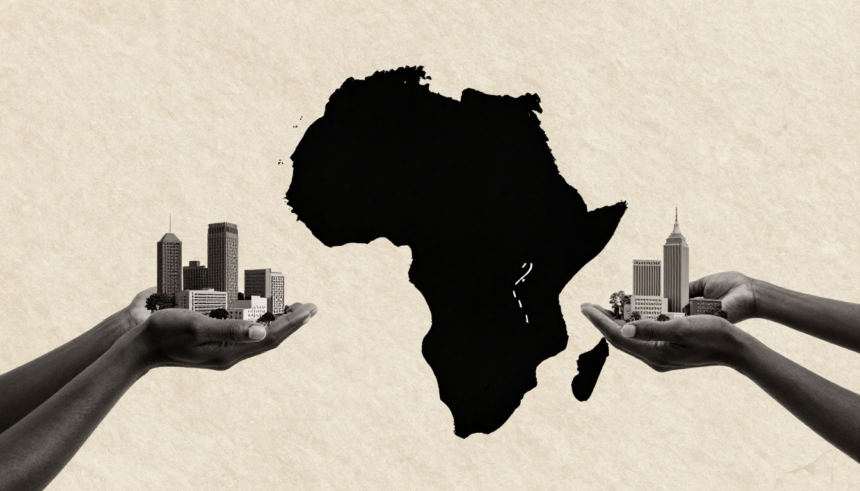
Sub-Saharan Africa is projected to grow at 4.6% in 2026–27, but declining foreign aid and rising debt pressures pose fiscal challenges that require structural transformation.
This dynamic compounds the fiscal squeeze facing many low-income countries. Reduced aid and tighter external financing constrain government budgets at a time when social spending and investment needs are rising. The World Bank’s Africa regional update warns that debt vulnerabilities remain elevated, with more than half of low-income and lower-middle-income countries facing high or elevated risk of debt distress.
The decline in external support creates a delicate balancing act for African policymakers: maintain fiscal discipline while fostering growth-enhancing investments in infrastructure, education and health, all amid tighter global financial conditions.
Innovation and Structural Transformation as Growth Engines
Conventional growth alone, measured in headline GDP figures, will not deliver shared prosperity without deep structural changes. The IMF and other multilateral institutions increasingly emphasise that “second-generation” reforms are essential to sustain momentum beyond stabilization. These reforms go beyond macroeconomic tweaks to address long-term impediments to productivity and competitiveness.
Digital transformation, human capital development and the simplification of bureaucratic processes are among the pillars recommended by international institutions to unlock new engines of growth. In particular, adoption of digital technologies could allow African economies to “leapfrog” into higher-value sectors, circumventing some of the limitations imposed by legacy infrastructure.
Yet the digital divide remains starkly uneven across the region, with differing capacities for technological adoption that could either accelerate or retard productivity gains in the coming decade.
Debt, Sovereignty and the Investment Conundrum
Another salient challenge is the so-called Sovereign-Bank Nexus, a phenomenon where sovereign borrowing crowds out credit to the private sector, undermining its role as the engine of innovation and job creation. Public debt servicing consumes critical fiscal space, leaving less available for investment in the sectors that could drive diversified growth.
The data tell a sobering story of debt vulnerabilities that have grown since the pandemic, a trend documented by institutions like the World Bank, which notes that debt ratios in several countries remain elevated and risk profiles have worsened in recent years.
This dual pressure, less external aid and more debt servicing obligations, has real consequences for governments’ capacity to act independently, a core issue for policymakers advocating budgetary sovereignty and domestic financing solutions.
A Contested Narrative in Global Development Finance
The shifts in Africa’s external financing landscape are part of a broader reconfiguration of global development finance. A recent analysis shows that multilateral institutions have increased their net contributions, even as traditional bilateral flows have declined, but this does not fully compensate for the reduction in other sources of capital.
At the same time, debates about the role of conditional finance and macroeconomic policy prescriptions continue. Some African observers argue that traditional external programs, including those linked to structural adjustment-style conditions, have sometimes hindered the capacity of states to build robust domestic financial ecosystems suited to their development priorities.
Balancing Growth with Resilience
Africa’s economic expansion, at around 4.6% through 2027, is a credible achievement in a challenging global environment. But to sustain this momentum, the continent must confront the limitations inherited from decades of aid reliance and external financing paradigms.
For growth to translate into jobs, reduced poverty and higher living standards, governments must create an environment where domestic resources are mobilized efficiently, where banks channel credit to productive sectors, and where innovation is rewarded rather than crowded out by fiscal constraints.
In a world of tightening aid budgets and shifting development finance dynamics, Africa’s pathway to economic sovereignty will be shaped by its ability to reconcile growth ambitions with financial independence, a task as demanding as it is necessary.