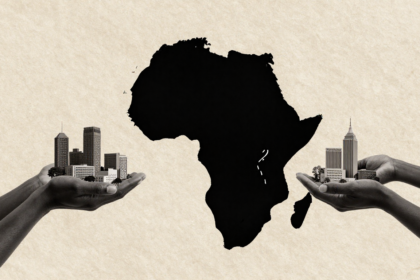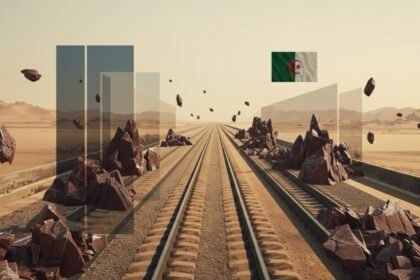


Across the continent’s most mineral-rich nations, a legislative tidal wave is sweeping away old agreements. Governments are no longer content with mere royalties; they are demanding a seat at the boardroom table and a larger slice of the $1.4 trillion battery metal market.
7 Trends Reshaping the Continent
State Equity: Mandatory free stakes of 10% to 26%.
Local Beneficiation: Laws banning the export of raw, unprocessed ore.
Variable Taxation: Royalties that adjust with market prices.
Local Content: Enforced procurement from 100% locally-owned firms.
Market Regulation: Strategic export freezes to control global supply.
Transparency: Mandatory publication of all mining contracts.
Green Compliance: Carbon budgets and environmental targets for mines.
The Rise of the State Shareholder
The most aggressive shift is the move toward mandatory state participation. In Zimbabwe, the Mines and Minerals Bill of 2025 now requires a 26% free-carried interest for the state in all new greenfield projects. In the DRC, the 10% non-dilutable state share has become a non-negotiable floor for any mining right transfer.
In September 2024, Tanzania mandated that 20% of all gold production be reserved for the Central Bank. Meanwhile, Burkina Faso adopted a code in late 2024 designed to maximize “local content,” forcing mining giants to buy from national suppliers and hire local experts.
Fiscal Weapons and Variable Royalties
To capture the upside of volatile commodity prices, African nations are moving away from fixed tax rates. Ghana recently introduced a sliding scale for royalties, allowing the state’s take to rise automatically when global gold or lithium prices spike.
Zimbabwe sent shockwaves through the sector by introducing a 20% capital gains tax applied retroactively for 10 years on certain mining title acquisitions, a move the Chamber of Mines warns could lead to years of litigation.
Market Power: The “OPEC” Strategy?
In February 2025, the DRC, which controls 70% of the world’s cobalt, demonstrated its market muscle by suspending exports for four months to stabilize global prices. This move signaled that African states are increasingly aware of their leverage in the global energy transition.
For experts, Africa cannot continue with models where we simply dig and ship. South Africa’s Climate Change Act of 2024 and new beneficiation rules echo this sentiment, legally requiring producers to make minerals available for local processing rather than exporting raw ore.
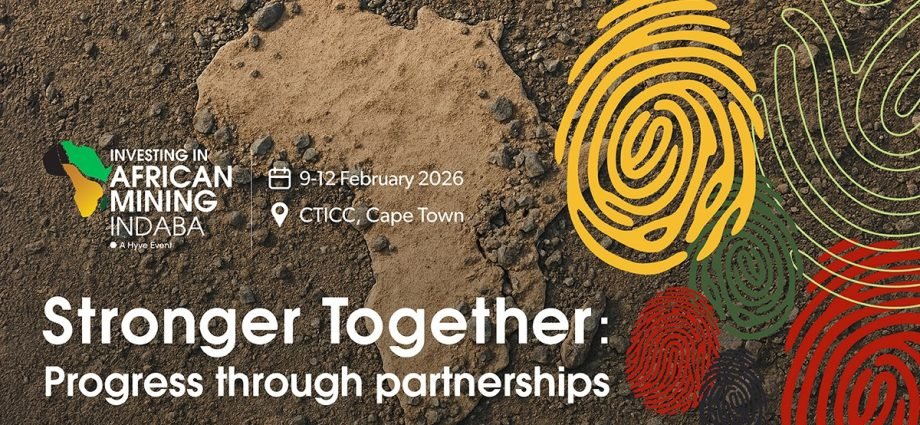
MINING INDABA 2026, THE CRUCIAL MEETING POINT
Date : February 9–12, 2026
Location : Cape Town International Convention Centre (CTICC), South Africa
Focus : Governance, regulation, and policy
Objective : Developing a coordinated continental strategy to leverage mineral wealth for regional diversification and industrial development.
Participants : African Heads of State, Mining Ministers, CEOs of global mining giants, international investors, and multilateral organizations.
The New Investment Landscape
Western multinationals are feeling the squeeze, leading to a shift in ownership. The 2025 sale of Newmont’s Akyem mine to China’s Zijin Mining Group for $1 billion illustrates a trend: Asian players are often more willing to accept high state participation and local processing requirements than their Western counterparts.
Yet, despite the tighter rules, capital continues to flow where the geology is undeniable. Zambia is the success story of the year, with a 30% year-on-year increase in copper production (224,000 tonnes in Q1 2025) and over $9.3 billion in new investments since 2024.
The “rules of the game” have shifted from attracting capital at any cost to leveraging minerals for national development. For investors, the price of entry into Africa’s subsoil is no longer just a check, it’s a partnership.