





As conventional mineral deposits fade and environmental standards tighten, processing historical tailings, known as “remining” is becoming a proven industrial strategy to unlock previously lost resources.
A shift in mining logic beneath our feet
Mining historically followed a linear path: remove ore, extract value, and discard the remainder as waste. But the remnants of past operations, particularly *tailings stored in surface facilities, are now recognized as potential repositories of value. Modern remining operations take these old stocks of finely ground material and apply sophisticated processing to recover metals that older technologies could not economically extract.
In South Africa, the retreatment of historical gold tailings has evolved into a major business segment for listed mining company Pan African Resources. According to the company, “gold tailings are central to our business” and “tailings retreatment represents the greatest contribution to recycling by Pan African,” with facilities designed to reprocess historical waste to recover residual metals.
Industrial-scale tailings retreatment in practice
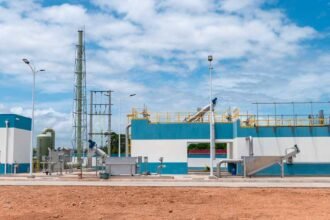
One of the flagship operations illustrating this trend is the Elikhulu Tailings Retreatment Plant in South Africa. According to Pan African Resources’ official materials. The automated plant processes over 1 million tonnes of historic tailings per month.The Elikhulu project reclaims tailings from multiple historical storage facilities, including those at Kinross, Leslie/Bracken and Winkelhaak, and consolidates residues into a modern storage site, thereby reducing environmental footprint and generating new gold production. In 2025, the plant operation pumps remined material in a slurry form at a rate of 1.2 mtpm to Elikhulu, with the capacity to produce up to 60 000 oz of gold per year.
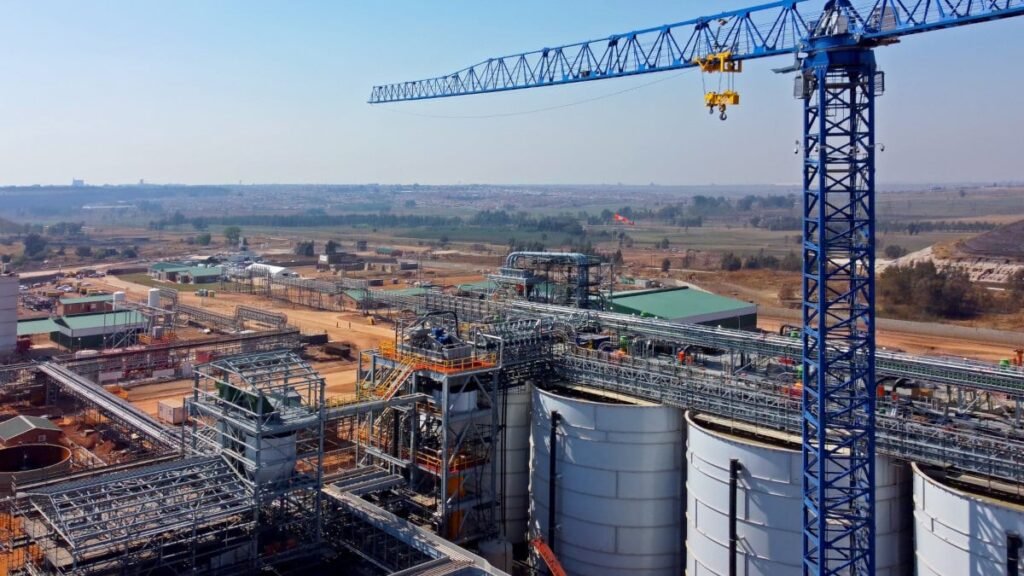
Another surface retreatment project from the same group, the Mogale Tailings Retreatment (MTR), reflects how tailings reclamation is expanding. Pan African Resources states officially that the MTR plant was commissioned in October 2024 and brings legacy tailings back into productive use.
MTR… strengthens our proven tailings retreatment track record while creating long‑term value for stakeholders… converting dormant gold resources into reliable, sustainable production.
Pan African Resources
In company disclosures, the MTR project is described as delivering ~50 000 oz of gold annually over a 13‑year life‑of‑mine, illustrating how tailings can provide meaningful new output without opening a new pit.
Technology and value recovery
These industrial examples show that what was once waste can now be a resource reservoir because of changes in extraction technology and economics. While older mills simply discarded low‑grade material, modern plants use advanced processing circuits that improve recovery while efficiently handling material already crushed and milled.
The operational success of Elikhulu and similar plants demonstrates that retrievable value exists in tailings at scale using current industrial methods, a reality reflected in the company’s corporate disclosures and annual reporting.

Economic and environmental implications
According to experts, remining offers several potential advantages that are underscored by real project performance data:
- Lower processing costs, since physical comminution (crushing and grinding) has already been done in the past.
- Reduced environmental liabilities, as retreatment facilities consolidate and rehabilitate legacy tailings storage areas.
- New production streams without opening new greenfield mines, an especially valuable proposition in jurisdictions with strict environmental regimes.
Institutional reporting underlines that these retreatment plants house modern environmental safeguards and continuous monitoring, aligning with regulatory compliance requirements and modern environmental stewardship.
Limits and continuing challenges
Remining is not a universal solution for all mineral waste. The effectiveness of retreatment depends on specific orebody characteristics, varying mineralogy, grade distribution, and technical complexity, and each project must be evaluated on its own merits.
Moreover, while projects like Elikhulu and Mogale demonstrate industrial viability, they require substantial upfront capital and experienced engineering execution, factors reflected in corporate feasibility studies and reporting.
A growing trend with broader implications
Interest in tailings retreatment is growing as industrial operators, investors and governments recognise that past mining waste can today be transformed into supply streams for metals essential to modern technologies, including those used in batteries, electronics and renewable energy systems.
By tapping legacy tailings with advanced technology and structured project execution, the mining industry is showing that valuable resources can be recovered from yesterday’s waste, potentially reshaping the economics of the sector while addressing historical environmental challenges.