
Mining in Africa: The Rules Are Changing

Between Resource Nationalism and Investment Pursuit, African Countries Are Rewriting the Mining Rulebook

Africa is rewriting the rules of mining. From the Democratic Republic of Congo to Zimbabwe, governments are increasing mandatory state participation in new projects — ranging from 10% free carried interests enshrined in law to proposed stakes of up to 26% in certain jurisdictions.
12 Min Read

From Kinshasa to Accra, via Harare and Dar es Salaam, African governments are overhauling their mining codes. Higher royalties, mandatory state participation and local processing requirements are reshaping a sector that attracts more than USD 9 billion in investment. As they seek to capture a greater share of the value generated by their natural resources, governments face a delicate balancing act: maximizing economic returns without undermining the appeal of their mining industries to international investors.

Key Figures

224,000 tonnes: Zambia’s copper production in Q1 2025 (+30% year-on-year)

USD 9.3 billion: Consolidated investments in Zambia’s mining sector since 2024

26%: Mandatory free state participation in Zimbabwe for all new projects

10%: Royalty rate on strategic minerals in DRC (compared to 2–3.5% before 2018)

USD 1 billion: Sale price of Newmont’s Akyem mine to Chinese group Zijin in Ghana

20%: Gold production quota to be reserved for Tanzania’s Central Bank

An Unprecedented Regulatory Wave

The year 2024-2025 marks a turning point in African mining governance. On July 18, 2024, Burkina Faso adopted a new mining code aimed at strengthening local participation and state oversight in mining operations. A few weeks later, in September 2024, Tanzania’s Mining Commission ordered all mining companies and gold export traders to reserve at least 20% of their production for sale to the Central Bank.

In December 2024, Ghana submitted to Parliament the Mining Royalties Regulations of 2025, introducing variable royalty rates on a sliding scale. This approach allows royalty rates to automatically adjust in response to changes in global commodity prices, an innovation that several observers consider as a model for other countries.

Zimbabwe is not far behind. The Mines and Minerals Bill of 2025, published in the Official Gazette on June 25, 2025, marks an important milestone in the reform of Zimbabwe’s mining legislative framework. Simultaneously, the government imposed that any transferee of mining titles must be a registered taxpayer as of January 1, 2025, a measure aimed at improving tax traceability.

Further south, South Africa published in May 2025 the draft Mineral Resources Amendment Bill, which aims to increase government control over the development of the country’s mineral resources. The bill requires all mineral producers to make minerals or mineral products available for local beneficiation, a provision that could transform the South African mining industry.

Resource Nationalism: A Common Doctrine

Behind this legislative fervor emerges a common philosophy: resource nationalism. African governments, aware that their subsoils contain the critical minerals necessary for the global energy transition, now intend to capture a larger share of mining rents.

The Democratic Republic of Congo, whose revised 2018 mining code continues to serve as a reference, perfectly illustrates this trend. The code imposes the transfer of 10% non-dilutable shares to the government upon application for or transfer of mining rights. Royalty rates have been significantly increased: strategic minerals such as cobalt and coltan are now taxed at 10%, compared to 2-3.5% previously. Additionally, Congolese citizens must hold at least 10% of shares in mining companies.

Resource nationalism, higher taxes, and local value creation are shaking up Africa’s mining sector in 2025-2026

Zimbabwe goes even further by requiring the government to hold a free 26% stake in all new greenfield mining projects through joint venture agreements. This policy, although controversial, reflects authorities’ determination to ensure that the exploitation of national resources primarily benefits Zimbabwean citizens.

Tanzania has also adopted similar measures. The State Participation in Mines Regulations of 2022 elaborate rules on state equity participation, reinforcing government intervention in the mining sector. In November 2025, the Minerals Commission announced a list of goods and services to be provided by 100% Tanzanian-owned companies, pushing the local content logic even further.

 The Fiscal Weapon: Between Pragmatism and Retroactivity

Increased fiscal pressure constitutes the second pillar of this regulatory revolution. In Ghana, the Growth and Sustainability Levy Act of 2023 requires mining companies to pay a levy of 1% of their gross production, in addition to existing royalties. The Gold Board also ordered all foreigners to exit the local gold trade market by April 30, 2025, a drastic measure aimed at regaining control of the gold supply chain.

Zimbabwe has adopted a particularly bold, even controversial approach. The Finance Act of 2023 introduced a special 20% capital gains tax on the acquisition of mining titles, applicable retroactively for 10 years before January 1, 2024. This retroactivity has raised concerns from the Chamber of Mines of Zimbabwe, which fears prolonged litigation with investors.

South Africa has chosen another path by adopting the Climate Change Act of 2024, signed in July 2024. This law establishes a legal framework to regulate greenhouse gas emissions, with carbon budgets and sectoral targets that will directly affect mining operations, traditionally major energy consumers.

DRC and Its Market Regulation Measures

The Democratic Republic of Congo also illustrates the desire of certain countries to no longer be merely suppliers of raw materials, but to become influential players in global markets. In February 2025, the DRC government announced a four-month suspension of cobalt exports to address excess supply and stabilize global prices.

This decision, which directly affects global supply chains for electric vehicle batteries, demonstrates African countries’ growing awareness of their market power. With Congolese cobalt representing approximately 70% of global production, such a suspension sends a clear message to international buyers: Africa now intends to influence price formation.

Investors Face a New Paradigm

These regulatory transformations are not without consequences for international investors. The sale of Newmont’s Akyem mine to Chinese mining group Zijin for up to USD 1 billion in 2025 reflects the sector’s restructuring. Western multinationals, accustomed to more stable regulatory frameworks, are gradually ceding ground to Asian players often more flexible in dealing with new state requirements.

Investor concerns focus primarily on four points: diminished regulatory predictability, fiscal retroactivity in certain cases, higher investment costs due to free state participation, and export restrictions limiting commercial flexibility.

Yet, the sector continues to attract significant capital. Zambia is striking proof: the country’s copper production increased by approximately 30% year-on-year in the first quarter of 2025, reaching approximately 224,000 metric tonnes. Consolidated investments made in the mining industry from 2024 amount to USD 9.3 billion, and the Zambian government aims to triple copper production to reach 3 million tonnes per year by 2031.

Foreign companies appreciate the open investment mentality and available incentives in Tanzania, although recent reforms reflect a movement toward increased resource nationalism. This apparent contradiction illustrates the challenge facing African governments: how to maximize mining revenues without stifling the foreign investment on which sector development depends?

Comparative analysis of new regulations reveals seven major trends crossing the continent. First, resource nationalism manifests through a widespread increase in state participation, observable in DRC, Zimbabwe, and Tanzania. Second, local beneficiation requirements increasingly impose on-site processing before export, as in South Africa, Zimbabwe, and Tanzania.

Third, taxation is experiencing substantial increases through variable royalties, special levies, and capital gains taxes in Ghana, Zimbabwe, and DRC. Fourth, local content policies impose local employment and procurement obligations from national companies, particularly in Tanzania and DRC.

Fifth, transparency requirements are strengthening with compliance to Extractive Industries Transparency Initiative (EITI) standards and mandatory contract publication, notably in DRC. Sixth, governments are granting themselves increased discretionary powers to regulate exports and impose local sale quotas. Finally, seventh, the environmental dimension is taking a growing place in legislation, as shown by South Africa’s Climate Change Act.

MINING INDABA 2026, THE CRUCIAL MEETING POINT

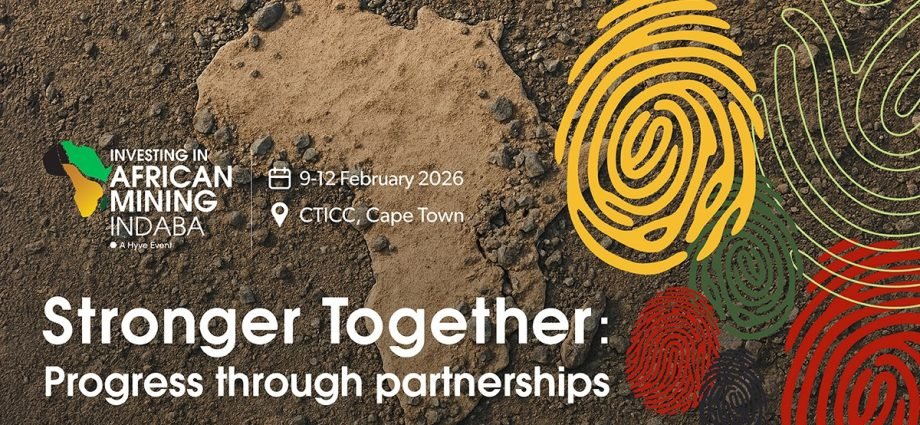
From February 9-12, 2026 in Cape Town, Mining Indaba will bring together African ministers and industry leaders to debate precisely these regulatory tensions. The Ministerial Symposium, a high-level forum, will focus on developing a coordinated mining and minerals strategy for the continent, addressing policy harmonization, regional integration, and investment frameworks.

The conference will dedicate an entire category to “Governance, regulation and policy,” featuring a flagship session: “From extraction to innovation: Leveraging Africa’s resource wealth for diversification and development.” The objective: to identify and debate actionable policy and regulatory frameworks enabling African governments to better leverage their mineral wealth.

The Democratic Republic of Congo will participate as a Platinum sponsor, emphasizing governance reforms and regulatory clarity to attract investors. A strong signal in a context where South African Minister Gwede Mantashe, whose country chairs the G20, declared: “We cannot continue with pit-to-port models, Africa must act as a team if we want to move up the value chain.”

Under South Africa’s G20 presidency, the G20 adopted a Framework on Critical Minerals, marking one of the clearest moments when African priorities shaped global mineral governance. Mining Indaba 2026’s theme, “Stronger Together: Progress through Partnerships,” perfectly encapsulates the challenge: how can governments, investors, and communities collaborate despite divergent interests?

As capital markets tighten and risk aversion increases, the conference will also explore new mine financing models: public-private partnerships, development finance institutions, and blended finance are emerging as essential tools for navigating this new regulatory landscape.

Africa’s mining landscape in 2025 is no longer that of 2015. Faced with growing global demand for critical minerals necessary for the energy transition, countries across the continent have understood that they hold trump cards. The new regulations, however constraining they may be for investors, reflect a legitimate ambition: to transform underground wealth into sustainable development for populations.

The African mining sector is positioned for significant growth and long-term opportunities, despite regulatory challenges. It remains to be seen whether governments will find the equilibrium point between economic sovereignty and attractiveness for foreign capital, without which exploiting these riches will remain untapped potential. The answer to this equation will determine whether Africa will truly become master of its resources or whether it will have simply exchanged one dependency for another.

Share This Article
Leave a Comment