
The Lobito Corridor is transforming Southern Africa’s mineral landscape. Connecting the DRC and Zambia Copperbelts to Angola’s Atlantic port, this 1,300 km railway is shifting copper and cobalt logistics, attracting major international financing, and enabling downstream industrialization. With a USD 753 million funding package and support from the DFC, DBSA, AFC, and EU, the corridor could cut transport costs by up to 30% and shorten transit times dramatically, creating new opportunities for local processing and regional economic integration.
Focus
Beyond Minerals: The corridor is expected to stimulate regional trade beyond copper and cobalt, including agricultural and manufactured goods. By reducing reliance on Indian Ocean ports, it strengthens Southern Africa’s industrial and economic resilience.
Jobs and Skills: Projected employment spans thousands directly in logistics and rail operations, with additional indirect opportunities along the corridor.
A Turning Point for African Trade and Industrial Strategy
In December 2025, the Lobito Atlantic Railway (LAR), the concessionaire for the corridor, announced that it had secured USD 753 million in financing to upgrade and modernize the 1,300-kilometer railway linking the Port of Lobito to the DRC border. The package includes USD 553 million from the U.S. International Development Finance Corporation (DFC) and USD 200 million from the Development Bank of Southern Africa (DBSA). The Africa Finance Corporation (AFC) acted as co-financial adviser, structuring the funds to accelerate rehabilitation and operational readiness.
According to the AFC, the corridor’s capacity is expected to rise to 4.6 million tonnes per year, while transport costs for copper and cobalt could drop by up to 30% compared to traditional eastern and southern routes. The deal will expand capacity, improve efficiency, and strengthen economic connectivity across Angola and the wider region.
A major milestone in our vision to establish the Lobito Corridor as Africa’s premier trade route
Nicholas Fournier, CEO of LAR
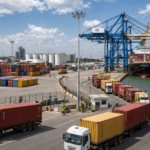
The corridor has already seen tangible operational progress: specialized rail wagons built in China have been delivered to the Port of Lobito, improving reliability and enabling commercial flows. Ivanhoe Mines, operator of the Kamoa-Kakula copper project in the DRC, used the corridor in 2023 for its first shipments and plans to transport up to 240,000 tonnes of copper annually via Lobito, illustrating the corridor’s potential to reduce transit times from 20 days to 8 days.
Connecting Mineral Wealth to Global Markets
The Lobito Corridor directly links the DRC and Zambia Copperbelts, regions accounting for the majority of global cobalt supply and significant copper reserves, to a deepwater Atlantic port. This strategic alignment is critical as both countries pursue policies to encourage local value addition through refining and processing rather than exporting unprocessed ore.

Analysts note that historically, logistical bottlenecks and dependence on eastern Indian Ocean ports limited the financial viability of local processing. By securing a reliable, fast, and cost-efficient route to the Atlantic, the corridor makes downstream industrial investment increasingly attractive, potentially reshaping regional metallurgical capacities and industrial ecosystems.
Moreover, institutional support has expanded: the European Union, under its Global Gateway initiative, has committed USD 130 million in infrastructure and trade facilitation programs, focusing on cross-border efficiency, training, and economic integration along the corridor.
Partnerships and Institutional Backing
The corridor operates under a 30-year concession managed by a consortium including Trafigura, Mota-Engil, and Vecturis, responsible for upgrading, maintaining, and operating the Lobito line.
The corridor will strengthen operational capacities, ensuring the railway operates at full potential,
Dr Ricardo Viegas D’Abreu, Angola’s Minister of Transport
He also highlighted its role not only in mineral exports but as a catalyst for broader regional economic growth.
Additionally, the Egyptian government has publicly expressed strategic interest in investing in the corridor. In discussions with Angolan authorities, Egyptian enterprises indicated readiness to contribute to infrastructure and logistics development along the corridor, as part of a wider South-South cooperation framework for industrial and transport integration.
Industrial Implications Beyond Mining
The corridor’s significance extends beyond mere transport. By lowering costs and transit times, it enhances the feasibility of local refining and beneficiation, which in turn encourages investment in downstream processing facilities in the DRC and Zambia. Governments in both countries have explicitly promoted policies linking export quotas to local processing obligations, aiming to capture greater economic value from their mineral wealth.
By providing a reliable, alternative export route to the Atlantic, the corridor also diversifies Africa’s supply chain resilience, reducing dependence on congested routes through Durban or eastern Indian Ocean ports. Analysts note that this could catalyze regional industrial clusters, linking transport, energy, and processing sectors for a more integrated economic ecosystem.
Challenges Ahead
Despite progress, obstacles remain. Portions of the railway within the DRC require rehabilitation, with current speeds and capacity still limited. Coordinating regulatory and operational frameworks across Angola, the DRC, and Zambia adds complexity, requiring harmonized customs, safety standards, and trade facilitation procedures. The corridor’s Lobito Corridor Transit Transport Facilitation Agency (LCTTFA) has been tasked with coordinating these cross-border operations, but ensuring seamless integration remains a key challenge.
Energy availability, especially for downstream processing, is another critical factor. While the DRC possesses substantial hydroelectric potential, consistent power supply is essential for the operationalization of high-capacity refineries and metallurgical plants.
Shaping Africa’s Critical Minerals Future
The Lobito Corridor is more than a railway. It is a strategic axis connecting Africa’s richest mineral provinces to global markets, with the potential to shift trade patterns, attract processing investment, and reduce reliance on longer export routes. As financing is deployed, infrastructure upgraded, and partnerships solidified, including Egyptian and European engagement, the corridor could redefine Southern Africa’s industrial landscape.
Success would mean not only turning geological wealth into industrial advantage but also positioning Africa as a decisive actor in global battery supply chains, critical for the energy transition over the next decade.