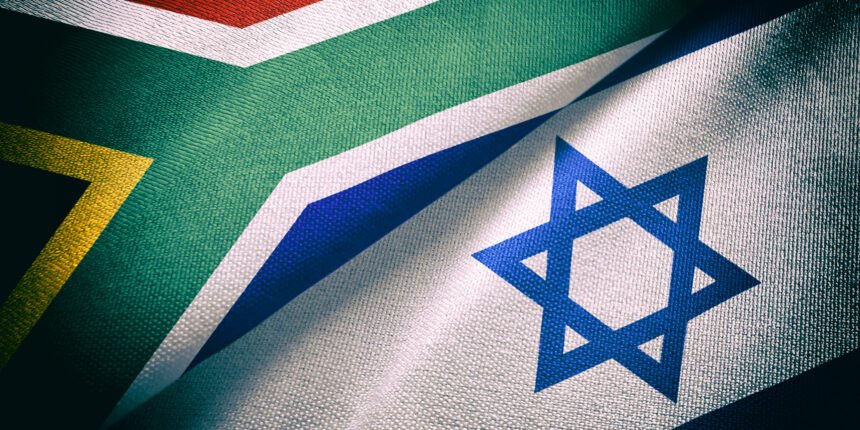

South Africa and Israel crossed an unprecedented threshold of bilateral tension: Pretoria declared Israel’s top diplomat in the country, Ariel Seidman, persona non grata, accusing him of “unacceptable violations of diplomatic norms” and of “insults” toward President Cyril Ramaphosa via official social media channels. In response, Israel expelled South African diplomat Shaun Edward Byneveldt, its representative to the Palestinian Authority, giving him 72 hours to leave. This escalation should not be read as a mere tit-for-tat retaliation, but as the crystallization of broader geopolitical dynamics tied to the Gaza war, international norms, and 21st-century African diplomacy.
Recent Developments
- Last Friday, South Africa’s Ministry of Foreign Affairs declared Ariel Seidman persona non grata, giving him 72 hours to leave Pretoria for “violating diplomatic norms,” including posts on official social media accounts and uncoordinated visits by Israeli officials on South African soil.
- Israel immediately retaliated by declaring Shaun Edward Byneveldt persona non grata, who must also depart within the same timeframe.
- This is a clear signal that formal diplomatic channels between Pretoria and Tel Aviv are in total breakdown.
More Than an Incident
This conflict is not isolated: since 2023, South Africa has taken Israel to the International Court of Justice (ICJ), accusing it of violating the 1948 Genocide Convention in the context of the Gaza conflict.
Although the ICJ has not yet issued a final ruling, the procedure gives a structural and long-term dimension to the rupture. Pretoria is not merely seeking better communication, but rewriting the diplomatic rulebook, using international law as a lever in global relations.
Key Data:
- ICJ filing date: December 2023
- Time given for diplomats to depart: 72 hours each
A Standoff with Multiple Reverberations
Cyril Ramaphosa, the President of South Africa, has not acted solely against Seidman: the decision reflects a strategy positioning South Africa as a moral and legal actor on the international stage. Israel, meanwhile, views the move as a political attack on its international image, denouncing the expulsion as “unilateral and unfounded.” Washington, according to multiple sources, is monitoring developments with concern, in the context of preexisting tensions around South African foreign policy.
South Africa’s stance is widely seen as an assertion of sovereignty and principle. However, analysts warn that such measures risk isolating Pretoria and straining relations with Western partners.
What This Means for Africa
A Normative Precedent
South Africa’s move sets a notable normative precedent. It demonstrates that an African state can seek to shape not only regional political dynamics but also the international norms governing armed conflict. By turning to legal and judicial mechanisms, Pretoria signals a shift in diplomatic posture—one in which normative influence rooted in justice and international law plays a central role, sometimes at the expense of more traditional bilateral engagement.
Potential Risks and Gains
This approach is not without risks. Observers point to the possibility of diplomatic isolation, as well as economic or political retaliation from external partners. At the same time, the strategy could yield significant gains, notably by strengthening South Africa’s standing among Global South countries and movements that advocate for the primacy of international law. The balance between these costs and benefits will largely determine the long-term impact of Pretoria’s stance.
Expert Perspectives
From a realist perspective, the use of legal instruments as tools of diplomacy is widely seen as a high-risk strategy, one that can nevertheless recalibrate power dynamics if applied effectively. Within an African strategic reading, the move is more commonly interpreted as an assertion of strategic autonomy, an effort by South Africa to demonstrate that its foreign policy is guided by its own norms and principles rather than shaped by external constraints.
This crisis is not a simple diplomatic quarrel. It represents a strategic transformation: South Africa seeks to translate its moral principles into active legal and diplomatic instruments, even if that means challenging a global power like Israel. If Pretoria continues its normative strategy, other African states will watch closely, not only what it says, but what it achieves.
ICJ Stakes
Why did South Africa bring the case to the ICJ?
To have the UN’s highest court recognize that Israel’s military actions in Gaza violate the 1948 Genocide Convention, a universal legal framework.
What is the significance of an ICJ ruling?
A favorable decision for South Africa would reinforce the role of international norms in armed conflicts and open the door for other states to pursue similar strategies.